Showing posts with label Piano Tuning And Repair Service. Show all posts

Monday, April 22, 2024

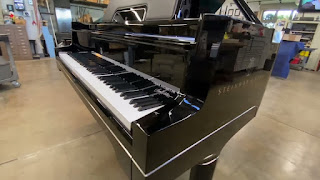
Why It’s Important to Tune Your Piano | Grand Piano Regulation

There are around 230 strings on the average piano. Each string on the piano has a unique pitch and frequency that must be tuned to the other strings. The sound quality of your piano is determined by these strings, so they must be maintained properly. Due to stress, these strings can stretch over time, causing the piano to become out of tune. Seasonal Changes in humidity also cause the piano to become out of tune.

When pianos are tuned regularly, they are easier to tune, stay in good condition, and maintain their value. Piano tuning regularly also avoids damage caused by overstretched strings. It will be more expensive and time-consuming to get a piano back into tune if it hasn't been tuned in a long time.


If a piano hasn't been tuned in a long time, a piano tuner may attempt to correct the problem by raising the piano's pitch. This involves pulling all of the strings, resulting in a sharp pitch. When the strings naturally stretch over time, causing the pitch to go flat, this overcompensation should keep the piano in tune.

You should have your piano checked every six months to a year to ensure that the strings last as long as possible. If the strings are damaged too much or the keys are not properly working, you should take a piano repair service. 

Get More Info : Piano Humidity Control

Website : https://www.nypianoworks.com/

Contact Us : Piano Tuner Upstate New York

Monday, April 1, 2024

PianoDisc Player System Installation and Repair | PianoDisc Repair

In the realm of musical innovation, where tradition meets technology, the PianoDisc player system emerges as a transformative addition to the world of pianos. Offering the enchantment of live performances at the touch of a button, this sophisticated system breathes new life into classical instruments. However, like any mechanical marvel, maintenance and repair are essential to ensure its continued harmony. In this blog post, we delve into the intricacies of PianoDisc player system installation and repair, exploring how it elevates the piano-playing experience.


1. The Symphony of PianoDisc: A Harmonious Fusion

a. Bridging Tradition and Technology:

Introduce readers to the PianoDisc player system, highlighting its role in seamlessly blending the timeless elegance of acoustic pianos with modern digital capabilities.

b. Musical Versatility:

Explore the versatility of the PianoDisc system, from classical compositions to contemporary tunes. Emphasize its ability to cater to diverse musical preferences with its vast library of performances.

2. PianoDisc Installation: Crafting Musical Magic

a. Precision Engineering:

Discuss the meticulous process of installing a PianoDisc player system. Cover the integration of sensors, solenoids, and control units, ensuring flawless synchronization between the piano and the digital components.

b. Customization Options:

Highlight the customizable features available during installation, such as playback modes, volume control, and compatibility with external devices. Illustrate how these options cater to the preferences of both pianists and listeners.

Get More Info : PianoDisc Repair

Website : https://www.nypianoworks.com/

Contact Us : Piano Tuner Berkshires

Wednesday, March 13, 2024

Basics of Piano Care

 FIRST POST! Thanks for checking out this blog page. We will be adding content every week or so, as long as we keep coming up with interesting and informative things to say.

I’d like to start by talking about basic piano care… The aspect of piano care that everyone is familiar with is tuning. Pianos go out of tune due to changes in humidity, which swells and shrinks the wood of the soundboard, bridges, and action parts. This happens regardless of how much or how little the piano is played. We STRONGLY recommend having your piano tuned twice a year. This is in line with all manufacturer’s recommendations. If you put it in terms of car maintenance (the other big, complicated machine in your life), tunings are the oil changes of piano care. It’s important to note that your piano may be out of tune and still sound relatively ok, but not be at the correct pitch. More on this in a future post. Is your piano out of tune? Find out how to determine this here.

A piano is a very complex instrument, with up to 10,000 parts — many of which move and are subject to wear over time. This causes the piano to function at a sub-optimal level, lessening your enjoyment and making playing and learning more difficult. The good news is this is a relatively easy condition to combat. Every 3 years or so, the action should be serviced. To do this, we remove the action, clean it with compressed air, lubricate all action centers, and tighten all screws (over 200 in uprights!). This serves three purposes: it makes the piano play better, avoids problems due to contaminant buildup, and allows for the detection of small issues before they become big ones. If it were a car, this would be the inspection and basic tune up.

As the piano ages, the parts deteriorate. Felt gets compressed, screws loosen, and gravity acts on the hammers. The result is poor performance — lack of dynamic range, the inability to play softly, and unevenness of touch. The solution to this is regulation. Regulation is the adjusting of numerous measurements and tolerances for each note, bringing the piano back to a level of playability it enjoyed when leaving the factory (or better). This takes several hours, but it is a normal and necessary part of caring for your instrument. In car terms, it’s like having the transmission serviced, and alignment done, and a thorough tune up — like a 50,000 mile service. This should be done every 5 years or so, but can also be done piecemeal at your six month appointments to spread out the expense. Vertical Regulation is explained in greater detail here, and Grand Regulation can be found here.

Visit Us : Piano Restoration Upstate New York.

Contact Us : Grand Piano Repair.

Monday, February 12, 2024

Wessell, Nickel, and Gross Actions

It sounds like you're referring to Wessell, Nickel, and Gross (WNG), a company known for their actions, particularly in the context of blog content. However, it seems there might be a misunderstanding as I'm not aware of any direct correlation between blog content and Wessell, Nickel, and Gross.

Could you please provide more context or clarify your request? Are you looking for information on Wessell, Nickel, and Gross's actions in a specific context, or are you looking for assistance with blog content related to them or any actions they may have taken? Any additional details you can provide would be helpful in understanding how to assist you better.

Get More Info : Wessell Nickel and Gross

Website : https://www.nypianoworks.com/

Contact Us : Piano Tuner Upstate New York

Monday, February 5, 2024

Basics of Piano Care | Grand Piano Regulation

FIRST POST! Thanks for checking out this blog page. We will be adding content every week or so, as long as we keep coming up with interesting and informative things to say.

I’d like to start by talking about basic piano care… The aspect of piano care that everyone is familiar with is tuning. Pianos go out of tune due to changes in humidity, which swells and shrinks the wood of the soundboard, bridges, and action parts. This happens regardless of how much or how little the piano is played. We STRONGLY recommend having your piano tuned twice a year. This is in line with all manufacturer’s recommendations. If you put it in terms of car maintenance (the other big, complicated machine in your life), tunings are the oil changes of piano care. It’s important to note that your piano may be out of tune and still sound relatively ok, but not be at the correct pitch. More on this in a future post. Is your piano out of tune? Find out how to determine this here.

A piano is a very complex instrument, with up to 10,000 parts - many of which move and are subject to wear over time. This causes the piano to function at a sub-optimal level, lessening your enjoyment and making playing and learning more difficult. The good news is this is a relatively easy condition to combat. Every 3 years or so, the action should be serviced. To do this, we remove the action, clean it with compressed air, lubricate all action centers, and tighten all screws (over 200 in uprights!). This serves three purposes: it makes the piano play better, avoids problems due to contaminant buildup, and allows for the detection of small issues before they become big ones. If it were a car, this would be the inspection and basic tune up.

Get More Info : Piano Restoration

Website : https://www.nypianoworks.com/

Contact Us : Piano Tuner Hudson Valley

Monday, January 15, 2024

Why Tune My Piano?

It may surprise you to learn this, but most of the time you can’t tell if your piano is in tune or not! While most people can hear the gross inharmony of a badly out unison, the piano usually goes out of tune in a more subtle way. 

Pianos fluctuate in pitch with changes in humidity (and extreme changes in temperature). This is why all piano manufacturers recommend that your piano be tuned AT LEAST twice a year. It is normal for your piano to go out of tune with these seasonal changes. Here is a brief description of what happens:

In winter, the air is drier, and this is compounded by indoor heat, which further dries out the air. This causes the wood in the piano - and there is a LOT of wood - to release its moisture and shrink. This causes the piano to go flat, sometimes to a surprising degree. The reverse happens in the warmer months: the soundboard, ribs, and wooden action parts all swell with the increased humidity, which (among other things) increases the pressure of the bridge on the strings, forcing the piano sharp.

Get More Info : Piano Restoration

Website : https://www.nypianoworks.com/

Contact Us : Piano Tuner Upstate New York


Wednesday, December 20, 2023

Free Pianos Aren’t Free - Al Tervenski | Piano Restoration

Many of us have been in this situation before. A friend, family member, or acquaintance has a free piano. Free piano! All you have to do is move it, they say. Or maybe you’ve recently moved into a new home that “includes” a piano. If these situations seem too good to be true, it’s because they often are. 

Pianos are like anything else in the marketplace. Some are worth thousands upon thousands of dollars, and some are absolutely worthless. If you moved into a house with a piano sitting sadly in the living room, the previous owners figured it wasn’t worth the $400 to move it. Why should you be stuck with it? Free pianos are often not worth taking. After moving it for $300-$400, and then pitch-raising and tuning it ($300), you’re in for $700 already! Now factor in regulation and repairs, and you’re well over $1000 invested into a piano that won’t last and won’t sound good. A piano your son or daughter won’t want to play, and

one that will just sit and collect dust.

Get More Info : Polyester Piano finish repair

Websites : https://www.nypianoworks.com/

Contact Us : Piano Tuner Upstate New York


Tuesday, December 19, 2023

PianoDisc Player System Installation and Repair | Piano Restoration

 New PianoDisc Prodigy Grand Player System

PianoDisc Prodigy is the culmination of everything PianoDisc strives for—the absolute best piano player system, powered by cutting-edge technology, with a simple, streamlined experience just for you. All in an invisible package on your piano. Enjoy listening to your most popular artists, playing your piano, hearing their band, hearing the real artists sing the song, while also watching the video of the performance. In addition, live streaming entertainment is available 24/7 to play right on your piano in your home without streaming subscriptions. Prodigy combines PianoDisc’s innovative SilentDrive HD technology and iQ’s High Resolution software with over 1,024 levels of expression into one box. 

No wires, no fuss. With Bluetooth, Analog, TOSLINK, MIDI 5-pin DIN, USB and Bluetooth MIDI, Prodigy gives you more ways to connect to your piano than ever before. The Android and iOS iQ Player App makes available thousands of songs in every genre, and gives you more precise control of playback and better performance than ever before. Create unlimited playlists to play whatever artists in whatever order you wish to listen. All of your PianoDisc music is stored on your device, this means instant music with no streaming or download delays. You can also have music on multiple devices to please everyone’s taste. And since all of your music is available from PianoDisc’s online delivery service, if you ever change iOS devices, a PianoDisc customer service representative will be happy to assist you in downloading your existing music to the new device. After Prodigy is installed it is completely invisible—no distracting boxes, wires, or cables that take away from the beauty of your piano. It’s just you and your enjoyment of the entertainment.

Get More Info : Polyester Piano finish repair

Websites : https://www.nypianoworks.com/

Contact Us : Piano Tuner Upstate New York

Sunday, November 26, 2023

Piano Tuning | Piano Tuning And Repair Service

Tuning a piano is the process of adjusting the tension of its strings, thereby altering their pitch, or frequency of vibration, by slightly turning the tuning pins to which they’re attached, so that each string sounds pleasingly in harmony with every other string. This harmony is achieved by tuning the piano according to certain known acoustical laws and aesthetic rules and customs.

How Is a Piano Tuned? Is It Difficult?

To the uninitiated, tuning a piano may seem a simple, straightforward procedure, but it isn’t. The process is complicated by the sheer number of strings and tuning pins (more than 200 of each, the exact number varying with the model), by the high tension under which the strings are stretched, by the tightness with which the tuning pins are anchored in the pinblock, and by the friction points over which the taut strings must slide as they’re being tuned. All of these factors are obstacles not only to tuning, but also to creating a tuning that will be stable for a reasonable length of time, given the piano’s use and environment.

Tuning is also made more difficult by the design element of modern pianos known as loop stringing. In loop stringing, each length of steel music wire in the treble actually forms two strings, which are separated by a sharp bend in the wire where the strings are anchored to the piano’s cast-iron frame. Sometimes these two strings sound the same note and are tuned to the same pitch. Other times, they are parts of adjacent notes, with one half of the wire tuned a half step higher or lower than the other half, the two halves necessarily held at distinctly different tensions. Because all parts of a single wire have a tendency to seek the same tension, loop stringing is a more challenging environment in which to learn how to create a stable tuning.

In addition to physical obstacles, there are acoustical obstacles to tuning. A paradox common to all fixed-pitch instruments, first discovered by the ancient Greeks, is that it’s impossible for all the intervals — thirds, fourths, fifths, sixths, etc. — within a perfect octave to themselves be perfect. This problem is dealt with by slightly expanding or contracting — tempering — each of these intervals so that, together, they will add up to a perfect octave. The tuner creates a temperament — a single octave of 13 notes at the center of the keyboard in which every note is tuned in its correctly tempered relationships to all other notes in that octave — and then copies those relationships to all remaining sections of the keyboard by tuning each note to be a perfect octave (or octaves) above or below the corresponding note in the temperament octave.

Get More Info : Piano Tuning And Repair Service

Websites : https://www.newyorkpianoworks.com/

Contact Us : Piano Tuner Upstate New York

Tuesday, October 31, 2023

Piano Master Technician

Piano technicians are often the unsung heroes of the music world, working behind the scenes to ensure that every note produced by a piano is perfect. Their expertise can make the difference between an instrument that sounds out of tune and one that produces harmonious melodies. In this blog post, we have the privilege of speaking with a true master of the craft, a Piano Master Technician, to learn about their experiences, insights, and the art of keeping pianos in pristine condition.

Meet the Master Technician:

[Include a brief introduction of the piano master technician, their background, and experience in the field. You may want to use a pseudonym to protect their privacy if needed.]

The Art of Piano Maintenance:

The Journey to Mastery: Discuss the technician's journey from a novice to a master in the field. What motivated them to become a piano technician, and how did they acquire the necessary skills and knowledge?

Piano Anatomy: Explain the different components of a piano and how they work together to create beautiful music. Include visuals or diagrams to help readers understand the intricate design.

Tuning and Voicing: Delve into the technician's process of tuning a piano, adjusting its pitch and tone. What tools and techniques do they use, and what challenges do they face when tuning a piano to perfection?

Get More Info : Piano Master Technician

Websites : https://www.newyorkpianoworks.com/

Contact Us : Piano Tuner Upstate New York

Sunday, October 22, 2023

Humidity Control | Piano Humidity Control

Your piano is made primarily of wood, a versatile and beautiful material ideal for piano construction. However, being made of wood, your piano is greatly affected by humidity. Seasonal and even daily changes in humidity cause wood parts to swell and shrink, affecting tuning stability and touch. Extreme swings in humidity can eventually cause wood to crack and glue joints to fail. 

Other materials in your piano also are affected by changes in moisture content in the air. The many felt and leather parts in your piano's action can change dimension, affecting regulation and friction, or stiffness of the touch. Very high humidity can even create condensation on metal parts such as strings, tuning pins, and hardware, eventually causing them to rust.

Get More Info : Piano Humidity Control

Websites : https://www.newyorkpianoworks.com/

Contact Us : Piano Tuner Upstate New York

Friday, September 29, 2023

Humidity Control for your Piano | Piano Humidity Control

Many people are not aware that humidity can have a profound effect on the tuning and performance of your piano. Humidity is a measure of how much water vapor is in the air, relative to the maximum amount of water vapor it can hold (that’s why it’s called relative humidity!).  Your piano is subject to wide swings in humidity. This is particularly true in the Hudson Valley, where the majority of our clients live. In the summer, humidity levels can go as high as 100%, while in the winter, your heating system can drop the relative humidity in your home into the single digits.

What does this mean for your piano? When the humidity is high, the soundboard and bridges absorb moisture and swell, increasing the tension of the strings and forcing the piano sharp. When the humidity is low, the opposite happens - the soundboard and bridges release moisture and shrink, reducing the downward pressure of the strings and forcing the piano flat. This is why almost all piano manufacturers - and your piano technician - recommend that your piano is tuned twice a year. In addition to forcing your piano out of tune, increased humidity affects the action parts, swelling the wood and increasing friction, which can make your action respond sluggishly (a major cause of “sticking” keys).

How can you mitigate the effects of humidity on your piano? There are several options. The absolute best solution is to have your whole house humidity controlled. This involves either attaching a humidifier to your HVAC system or installing a separate humidifier/dehumidifier system in your home. While this is the best solution, it can be very expensive to install and maintain, and is usually cost prohibitive.

Get More Info : Piano Humidity Control

Websites : https://www.newyorkpianoworks.com/

Contact Us : Piano Technician Berkshires

Thursday, August 31, 2023

Wessell, Nickel, and Gross Actions | Polyester Piano finish repair

Scott is a trained Action Rebuilder specializing in the composite actions from Wessell, Nickel, and Gross. These are the same actions that are in every new Mason and Hamlin piano. Call to learn about the benefits of rebuilding your action with these state-of-the-art parts! 


Get More Info : Wessell Nickel and Gross

Websites : https://www.newyorkpianoworks.com/

Thursday, August 17, 2023

Piano Humidity Control | Humidity Control

Your piano is affected by the large swings in humidity that we have in the area. A Dampp-Chaser system from Piano Life Saver will keep your piano at a relative humidity of 45% +- 5% all year round. This will protect your soundboard from cracks and compression ridges, and stabilize your piano so it stays better in tune between appointments. All of us at New York Piano Works are Certified Installers.


Get More Info : Piano Humidity Control

Websites : https://www.newyorkpianoworks.com/

Contact Us : Piano Tuner Berkshires                                                                                                                                            


Wednesday, August 9, 2023

Humidity Control for your Piano | Piano Humidity Control

Many people are not aware that humidity can have a profound effect on the tuning and performance of your piano. Humidity is a measure of how much water vapor is in the air, relative to the maximum amount of water vapor it can hold (that’s why it’s called relative humidity!).  Your piano is subject to wide swings in humidity. This is particularly true in the Hudson Valley, where the majority of our clients live. In the summer, humidity levels can go as high as 100%, while in the winter, your heating system can drop the relative humidity in your home into the single digits.

What does this mean for your piano? When the humidity is high, the soundboard and bridges absorb moisture and swell, increasing the tension of the strings and forcing the piano sharp. When the humidity is low, the opposite happens - the soundboard and bridges release moisture and shrink, reducing the downward pressure of the strings and forcing the piano flat. This is why almost all piano manufacturers - and your piano technician - recommend that your piano is tuned twice a year. In addition to forcing your piano out of tune, increased humidity affects the action parts, swelling the wood and increasing friction, which can make your action respond sluggishly (a major cause of “sticking” keys).

Get More Info : Piano Humidity Control

Websites : https://www.newyorkpianoworks.com/

Contact Us : Piano Tuner Upstate New York

Tuesday, August 1, 2023

Tuning $175 | Piano Tuning And Repair Service

A standard tuning is for those pianos that have been tuned in the past 6 months to a year. It involves manipulating the tuning pins to bring all 230 strings to their proper and harmonious pitch. We use a combination of aural and electronic tuning to ensure your piano sounds great! We also tighten the plate bolts, check for problems, and tighten the bench.

If we haven’t seen your piano in a while, it may need one or more Pitch Adjustments to bring the strings up to a tension where fine tuning is possible without stressing the piano.


Get More Info : Piano Regulation And Voicing

Websites : https://www.newyorkpianoworks.com/

Contact Us : Piano Tuner Upstate New York

Thursday, March 3, 2022

How does the humidity level affect my piano's tuning?

 The swelling and shrinking of the piano's soundboard is the most immediate and noticeable effect of humidity change. The soundboard, a sheet of wood approximately 3/8” thick, is made with a slightly crowned shape. The strings pass over the soundboard and are connected to it by a wooden piece called a bridge. The upward crown of the soundboard presses the bridge tightly against the strings.


As the moisture level in the soundboard increases during periods of high relative humidity, the crown expands and pushes the bridge harder against the strings. The strings are stretched tighter and the piano's pitch rises. Because this increase in crown is greater in the center of the soundboard than at the edges, the pitch rises more in the middle octaves than in the bass or treble registers. 

Relative humidity (RH) is the amount of moisture contained in the air, compared to the maximum amount of moisture that the air is capable of holding. During periods of low relative humidity the soundboard shrinks, reducing the crown and decreasing pressure against the strings. The pitch drops, again with the greatest effect noticeable in the center of the keyboard. When relative humidity returns to its previous level, the average pitch of all the strings will return to normal, although the exact pitch of individual strings will be slightly changed from their original settings. Thus, a piano only will stay in tune as long as the relative humidity level in the air surrounding the soundboard remains constant. Extreme humidity changes require making greater changes in string tension to bring the piano into tune. This upsets the equilibrium between the string tension and the piano frame, and the piano never becomes stable.


More Important Links:

Thursday, February 24, 2022

What is Humidity Control? | Piano Humidity Control

 Your piano is made primarily of wood, a versatile and beautiful material ideal for piano construction. However, being made of wood, your piano is greatly affected by humidity. Seasonal and even daily changes in humidity cause wood parts to swell and shrink, affecting tuning stability and touch. Extreme swings in humidity can eventually cause wood to crack and glue joints to fail.


Other materials in your piano also are affected by changes in moisture content in the air. The many felt and leather parts in your piano's action can change dimension, affecting regulation and friction, or stiffness of the touch. Very high humidity can even create condensation on metal parts such as strings, tuning pins, and hardware, eventually causing them to rust.

Get detail info: Piano Humidity Control

Also Visit: Piano Repair


Wednesday, February 16, 2022

How long does a pitch adjustment take? | Piano Rebuilding Albany

A pitch adjustment is essentially a special tuning procedure designed to leave the piano approximately in tune. For moderate pitch corrections, the procedure takes about the same time as a tuning, or less. Extreme pitch changes may require two separate pitch adjustments.

The pitch adjustment and subsequent tuning may be done in one visit, or the tuning may be scheduled for a short time later depending upon how far the pitch had to be changed. In general, the longer a piano has gone without regular service, the more tunings will be required to reestablish tuning stability.

Like your car, your piano is a major investment that deserves regular servicing to keep it working well and preserve its value. Most importantly, the well-maintained piano sounds better, plays better, and gives you and your family a wealth of musical pleasure.

Get detail info: Piano Rebuilding Albany

Also Visit: 

Piano Regulation And Voicing

Piano Repair


Thursday, January 27, 2022

Why is reconditioning or rebuilding of the mechanical systems sometimes necessary prior to regulation?

Prior to regulation, your technician will assess the condition of your instrument. If it has badly worn parts or if there has been corrosion or moth damage, the piano may not be able to be properly regulated without some repair or replacement of parts.

Reconditioning is the process of putting your piano back in good condition by cleaning, repairing, and adjusting your instrument for maximum performance with replacement parts only where specifically indicated. If your piano has deteriorated beyond simple reconditioning, it may need to be rebuilt.

Rebuilding involves complete disassembly, inspection, and repair as necessary with replacement of all worn or deteriorated parts. The piano is then reassembled, tested, and adjusted to the same or similar tolerance and performance as when it was new.

Your piano is a major investment that deserves to be protected through regular servicing by a qualified technician. Properly maintained, your piano will sound its best and give you and your family a lifetime of enjoyment.

Get detail info: Piano Repair

Also Visit: Piano Finish Repair

Grand Piano Regulation

For pianists, a grand piano is a majestic instrument capable of expressing a vast array of emotions. But that expressiveness hinges on one c...