Showing posts with label Harpsichord Repair Hudson Valley. Show all posts

Thursday, March 7, 2024

Basics of Piano Care | Piano Rebuilding Hudson Valley

FIRST POST! Thanks for checking out this blog page. We will be adding content every week or so, as long as we keep coming up with interesting and informative things to say.


I’d like to start by talking about basic piano care… The aspect of piano care that everyone is familiar with is tuning. Pianos go out of tune due to changes in humidity, which swells and shrinks the wood of the soundboard, bridges, and action parts. This happens regardless of how much or how little the piano is played. We STRONGLY recommend having your piano tuned twice a year. This is in line with all manufacturer’s recommendations. If you put it in terms of car maintenance (the other big, complicated machine in your life), tunings are the oil changes of piano care. It’s important to note that your piano may be out of tune and still sound relatively ok, but not be at the correct pitch. More on this in a future post. Is your piano out of tune? Find out how to determine this here.

A piano is a very complex instrument, with up to 10,000 parts - many of which move and are subject to wear over time. This causes the piano to function at a sub-optimal level, lessening your enjoyment and making playing and learning more difficult. The good news is this is a relatively easy condition to combat. Every 3 years or so, the action should be serviced. To do this, we remove the action, clean it with compressed air, lubricate all action centers, and tighten all screws (over 200 in uprights!). This serves three purposes: it makes the piano play better, avoids problems due to contaminant buildup, and allows for the detection of small issues before they become big ones. If it were a car, this would be the inspection and basic tune up.

Get more Info : Piano Restoration

Website : https://www.newyorkpianoworks.com/

Contact us : Piano Rebuilding Hudson Valley

Piano Tuning And Repair Service Hudson Valley , Piano Tuning And Repair Service Upstate New York , Grand Piano Regulation , Piano Tuner Upstate New York


Tuesday, January 23, 2024

Rebuilding vs. Restoration

Every week, I speak with at least a couple of people who are interested in not giving up on their older piano, but rather bringing it back to a playable condition. There are two ways to do this: Rebuilding and Restoration. Both attempt to restore the piano to its former glory, but the philosophy behind them differs.

Rebuilding can involve anything from an action overhaul to replacement of soundboard, strings, and pin block. Where possible, new parts are used. I say where possible because while the industry became standardized around the 1920s, pianos prior to that often have parts for which it is impossible to find replacements.

For example, we are doing a rebuild right now for a client in Albany, a piano from 1909. The hammer butts and hammer assemblies are able to be replaced, but the whippens (the mechanism which transfers the energy from the key to the hammer assembly) are non-standard and must be reconditioned by cleaning and by replacing leather and felt where possible. 

Get More Info : Piano Restoration

Website : https://www.nypianoworks.com/

Contact Us : Piano Restoration Upstate New York

Sunday, January 7, 2024

Service your action today!

One of the most often performed and most necessary things one can do to a piano is to have the action serviced. The benefits, compared to the cost, result in great value and a noticeable improvement in the performance of your piano.

Action Servicing involves three procedures: Cleaning the action, tightening all screws, and lubricating action centers. The procedure takes about an hour. 

Cleaning is the first step. The action is removed from the piano, dust and debris are blown out with compressed air (outside of course), and the action is wiped down with cleaning solution and a microfiber cloth.

Next, we tighten all the screws. In an upright piano action, that’s well over 200 screws! We tighten hammer butt screws, whippen screws, action frame screws, and damper screws. In a grand action there are fewer screws: Action frame screws, Hammer flange screws, and whippen screws.

Finally, we lubricate the moving parts. Most pivot points in piano actions are comprised of pins that ride inside cloth bushings. The lubricant that we use clears out dust and debris, lubricates the pivot point, and protects it from future damage. In an upright piano, we lubricate hammer butt flanges, damper flanges, whippen flanges and jack flanges, as well as balance rail pins. In a grand piano we lubricate hammer flanges, whippen flanges, jack flanges, and balance rail pins.

Get More Info : Piano Restoration

Website : https://www.nypianoworks.com/

Contact Us : Piano Tuner Upstate New York

Thursday, November 16, 2023

Piano Master Technician

The world of music is a symphony of craftsmanship, and at its heart lies the piano – a timeless instrument that has captivated audiences for centuries. Behind the scenes, a key player in maintaining the magic of these grand instruments is the piano master technician. In this blog post, we'll delve into the fascinating realm of piano craftsmanship and explore the skills and artistry of these unsung heroes who ensure that every note resonates with perfection.

The Craftsmanship Behind the Keys:

Explore the intricate construction of a piano and the various components that contribute to its unique sound.

Discuss the historical evolution of piano craftsmanship and how it has shaped the instruments we know today.

The Role of a Piano Master Technician:

Uncover the responsibilities of a piano master technician, from tuning and regulation to voicing and restoration.

Highlight the importance of regular maintenance in preserving the longevity and performance of a piano.

Tuning Mastery:

Dive into the art of piano tuning, exploring the delicate balance required to achieve the perfect pitch.

Discuss the impact of environmental factors on tuning and how technicians use their expertise to overcome challenges.

Regulation and Precision:

Examine the role of regulation in ensuring the responsiveness and consistency of a piano's touch.

Showcase the precision required in adjusting the piano's action mechanism to meet the exacting standards of musicians.

Get More Info : Piano Master Technician

Websites : https://www.newyorkpianoworks.com/

Contact Us : PianoDisc Installation


Tuesday, October 10, 2023

Why Tune My Piano? | PianoDisc Repair

Tuning a piano is a crucial maintenance task that helps ensure the instrument sounds its best and performs optimally. Here are several reasons why you should tune your piano regularly:

Maintain Pitch: Pianos are designed to produce specific musical notes at particular frequencies. Over time, due to factors like temperature, humidity, and usage, the strings inside the piano can stretch or contract, causing the piano to go out of tune. Regular tuning helps maintain the correct pitch and ensures that the piano sounds in tune with other instruments.

Musicality: A well-tuned piano produces a clear and pleasing tone. Out-of-tune pianos can sound dissonant and unpleasant, making it difficult to play or enjoy music.

Ear Training: For musicians, particularly pianists, playing on an in-tune piano is essential for developing a good ear. Regular exposure to proper tuning helps train the musician's ear to recognize and produce accurate musical intervals.

Artistic Expression: Pianists rely on the piano's expressive capabilities to convey their musical intentions. A well-tuned piano allows for a broader range of dynamics, tonal colors, and emotional expression in music.

Instrument Longevity: Neglecting piano tuning can lead to more significant issues over time. As the strings continue to stretch and contract, they can exert undue stress on the piano's structure, potentially causing damage that is expensive to repair.

Educational Purposes: Students learning to play the piano benefit from practicing on a properly tuned instrument. It allows them to develop a good sense of pitch and musicality, which is essential for their musical progress.

Performance: If you plan to perform on your piano or have it used in public performances, it's crucial that it is in tune. An out-of-tune piano can be embarrassing and detract from the quality of the performance.

Resale Value: A well-maintained and regularly tuned piano typically has a higher resale value than one that has been neglected. Potential buyers are more likely to be interested in a piano that sounds and plays well.

Prevent Repairs: Regular tuning can help identify and address minor issues before they become major problems. This proactive approach can save you money on more extensive piano repairs down the line.

It's generally recommended to have your piano tuned at least once or twice a year, depending on factors like climate, usage, and the quality of your piano. Professional piano tuners have the expertise and tools needed to ensure your piano stays in excellent condition and sounds its best.

Get More Info : Polyester Piano finish repair

Websites : https://www.newyorkpianoworks.com/

Contact Us : Piano Tuner Berkshires
Thursday, July 20, 2023

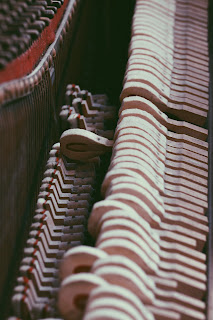
Rebuilding vs. Restoration | Piano Regulation And Voicing

Every week, I speak with at least a couple of people who are interested in not giving up on their older piano, but rather bringing it back to a playable condition. There are two ways to do this: Rebuilding and Restoration. Both attempt to restore the piano to its former glory, but the philosophy behind them differs.

Rebuilding can involve anything from an action overhaul to replacement of soundboard, strings, and pin block. Where possible, new parts are used. I say where possible because while the industry became standardized around the 1920s, pianos prior to that often have parts for which it is impossible to find replacements.

For example, we are doing a rebuild right now for a client in Albany, a piano from 1909. The hammer butts and hammer assemblies are able to be replaced, but the whippens (the mechanism which transfers the energy from the key to the hammer assembly) are non-standard and must be reconditioned by cleaning and by replacing leather and felt where possible. 

Rebuilding often gives the best musical results, as newer parts are often superior. However, some people want their piano as true to the original as possible. That is where restoration comes in.

Restoration seeks to use the original parts and historically accurate materials. This will reproduce, as closely as possible, the aesthetic of the time in which the piano was built. This route is most often reserved for pianos which have great historical or sentimental value. It is often cheaper to replace parts than it is to recondition them, as reconditioning is extremely labor-intensive. Thus, the cost of historical restoration of a piano can exceed that of rebuilding by a fair amount.

Whether you are interested in rebuilding or restoring your piano, New York Piano Works is the primer facility for Upstate New York and the entire Hudson Valley. Make an appointment to have your piano evaluated today! www.newyorkpianoworks.com 

Get More Info : Piano Restoration Kingston

Contact Us : Harpsichord Repair Hudson Valley

Thursday, June 9, 2022

When does a piano need reconditioning or rebuilding?

Most pianos can be played for many years without major repairs. However, the tone, touch, and appearance will continually decline with age. When regular maintenance such as cleaning, regulating, voicing, and tuning can no longer provide satisfactory performance, a piano may require reconditioning or rebuilding.

Exactly when a piano needs rebuilding or reconditioning depends on its original quality, the climate, usage, and performance requirements. One piano may need rebuilding after just twenty years, while another may need only reconditioning after fifty years. The best way to decide is to seek out a qualified piano rebuilder with the judgment, experience, and expertise to advise you on such an important decision. If your Registered Piano Technician does not offer rebuilding services, ask for referrals.

Get detail info:

Piano Rebuilding Upstate New York

Piano Rebuilding Hudson Valley

Monday, June 6, 2022

How do I decide if major repairs of piano are appropriate?

Not all pianos are worth the expense of reconditioning or rebuilding. In consultation with your piano technician, you should consider the following factors:

  • The overall condition of the piano. Can it really be restored to its original condition or is it deteriorated beyond repair? Pianos subjected to severe fire, flood, or moving damage may not be repairable.
  • The quality, size, and type of the piano. Low priced, small pianos of poor design have limited potential. If the rebuilt piano would not be capable of meeting your performance needs, it would be better to replace it with one of better design.
  • The cost of repairs versus replacement. Major repairs may exceed the value of small low-quality pianos. However, most large high-quality instruments can be rebuilt for one-half to two-thirds of the cost of a comparable new piano, making rebuilding a cost-effective option for fine pianos.
  • Sentimental value. Personal attachment or historical value may justify investing in major repairs rather than replacement.
Get detail info:

Tuesday, May 24, 2022

Dusting Your Piano | Piano Master Technician

Dust is very abrasive and can scratch the finish if wiped off with a dry cloth. To avoid scratching, dust the piano lightly with a feather duster. Alternatively, wipe lightly with a soft damp cloth to pick up the dust, followed immediately with a dry cloth. The cloths should be soft cotton such as flannel because coarse or synthetic fabrics can scratch some finishes. Wring out the damp cloth thoroughly so it leaves no visible moisture on the surface.

To avoid creating swirl marks, always wipe with long straight strokes rather than circular motions. Wipe with the grain for natural wood finishes, or in the direction of the existing sheen pattern for solid-color satin finishes.

Because some exposed parts inside your piano are fragile, it's best to let your technician clean these areas.

Get detail info: 

Piano Repair

Piano Finish Repair

Thursday, May 19, 2022

Should you polish your piano or not?

 Before using polish on your piano, be sure it is actually necessary and beneficial. In general, most manufacturers recommend using against polishes because of the potential for damage to the finish and contamination of other parts of the instrument.


Common household products such as "lemon oil" or inexpensive "furniture polish" should be avoided. Despite the labels' claims that they "protect" the finish or "feed" the wood, they offer no protection from scratching and can actually soften the finish if over-used. Worse, they often contain silicones and oils that contaminate the wood, complicating future refinishing or repairs. Silicone is especially dangerous because of its tendency to spread within the piano, sometimes causing extensive internal damage. Avoid aerosol products altogether since the over-spray can contaminate piano strings, tuning pins, and action parts.

An appropriate polish can help to restore luster to a dulled finish or reduce the tendency of some finishes to show fingerprints. However, it should be applied sparingly and infrequently, and all excess should be wiped clean with a soft dry cloth so no visible film remains. To prevent scratching, always dust before polishing. Specific recommendations follow.

Get detail info:

Friday, May 13, 2022

How does a technician voice a piano?

 Before you or your technician can fully evaluate the tone of your piano, it must be well-tuned. Tuning is the first step in improving the sound of any piano and may actually provide the tone you desire. If the tone is still not satisfactory, your technician will inspect the action, hammers, and strings. If these components are severely worn, major repairs may be required before an improved tone is possible.


  • Moderately worn hammers can be re-shaped with sandpaper to remove string grooves and restore their original rounded shape. Next, the hammers are aligned to
  • Action regulation should be checked or adjusted. This ensures an even, powerful response from each key.
  • If tuning, hammer shaping, and regulation are correct, the tone probably will be balanced but still may be too bright or mellow for your taste. If so, your technician might recommend voicing the hammers.
  • For a tone that is too loud, too bright, or seems to die out too quickly, softening the hammer felt is often recommended. This is usually done by inserting needles into specific areas of the hammer to increase flexibility.
  • For a tone that is too weak or too mellow, hardening of the hammer felt may be necessary. This is usually done by filing away soft outer layers of hammer felt or by applying a chemical hardening solution.

Once the overall tone is correct, individual notes are voiced to make the tone as even as possible from one end of the keyboard to the other. In some pianos, certain notes still may sound different from their neighbors, no matter how skillfully the technician voiced the piano. This most commonly occurs about an octave below middle C, where the strings change from steel wires wrapped with copper to plain steel. Such irregularities are a result of design compromises, and usually cannot be corrected by voicing.

Get detail info:

Monday, May 9, 2022

Does your piano need voicing?

 Your piano may benefit from voicing if:


  • Your piano sounds different than when you purchased it.
  • You don't like the sound even after it has been tuned.
  • The tone varies radically from note to note.
  • You cannot achieve a range of tones (mellow to bright) at different volumes.
  • The piano has lost its ability to play softly.

Before deciding if a new piano needs voicing, make sure it is well-tuned and well-regulated. Then, play a wide variety of music on it. Most voicing procedures are long-lasting, so give yourself some time to explore the sound of a new instrument before deciding to change it.

How often voicing is needed depends upon the piano's usage and its intended audience. Pianos in concert halls and recording studios often receive minor refinement of the voicing before each performance. A home piano may need some initial voicing to customize it to the owner's taste, then once every one to five years to maintain its tone.

Your piano and your musical needs are unique -- your own schedule for periodic voicing is a matter for you and your technician to decide. To find out how voicing might improve the tone of your piano, ask for a demonstration on one or two notes.


Also Visit:

Thursday, April 28, 2022

What is a Good Tone in Piano?

 The tone varies, even among pianos of the same make and model. No matter what its size or cost, any good piano should provide a wide range of tones, from soft and sweet to loud and bright. The tone should be even from the lowest to the highest notes. Most of all, it should sound musical.


What does the perfect piano tone sound like? There is no single answer because everyone's taste varies. Also, certain tonal characteristics are more suited to specific styles of music. A bright, lively tone might be best for jazz, whereas you might prefer a rich and dark sound for Beethoven's music. There are many different sizes and models of piano available in the marketplace; you chose your piano because it sounded good to you.

But a piano's tone changes with use. As the hammers wear and compact, the tone often becomes too bright and harsh, robbing the pianist of the ability to produce a sweet sound. As parts wear, the regulation (adjustment of the mechanical parts that transmit motion from the fingers to the hammers) becomes uneven, and the pianist loses control over volume and tone. This is most noticeable in quiet playing. A delicate pianissimo passage becomes very difficult or impossible to play, and some keys may not sound at all if played very lightly.

Aging of the piano's strings and structure also can diminish its tone.

Other factors that affect the sound you hear from your piano are: 

  • ROOM ACOUSTICS -- Hard shiny surfaces such as windows and bare floors reflect high frequencies, making a piano sound bright and loud. High ceilings or large adjoining rooms add resonance. Rugs and upholstered furniture soften the tone and add warmth.
  • THE LID -- Both grands and verticals sound louder and brighter if the lid is opened.
  • YOU -- Your ears are sensitive and will perceive sound differently if you have spent all day in a quiet office or at a loud construction site.

Get detail info:

Thursday, April 7, 2022

How will humidity control benefit my piano?

While not eliminating the need for regular piano maintenance, humidity control will allow more stable tunings by reducing the radical pitch changes your piano may experience through the seasons. When your piano stays closer to its correct pitch level of A440 (440 cycles per second), your technician does not have to perform a large pitch raising or lowering procedure prior to fine-tuning. Thus, a balance of forces is maintained between the strings and the frame of the piano, allowing more accurate and stable tunings to be done.

In addition, a stable environment will help to preserve your piano through the years. Wood parts, glue joints, metal parts, and your piano's finish will all last longer if not subjected to excessive humidity swings. Maintaining the correct environment will preserve your piano investment for a lifetime of enjoyment.

Get detail info: Piano Rebuilding Hudson Valley

Also Visit: 

Piano Regulation And Voicing

Piano Repair

Grand Piano Regulation

For pianists, a grand piano is a majestic instrument capable of expressing a vast array of emotions. But that expressiveness hinges on one c...